


Top cryptocurrency
Before Tuesday (March 25), there had not been a post on Instagram from Welch for five weeks, the previous X / Twitter post from her was December 20, and there hasn’t been a new episode of the Talk Tuah Podcast since December 3 https://aus-online-casino.com/.
It’s been a minute since Welch, who completely inexplicably rode a single viral moment of TikTok fame to internet stardom, has spoken about…well, anything. Up until December 4, she went about her usual business, which included posting episodes of her Talk Tuah podcast and heavily promoting $HAWK coin at just about every turn on Twitter. Once $HAWK officially launched, the bottom seemed to fall out.
„Half of those people that done it were, like, my fans. They trusted me, like, guiding them to it. And I don’t know … It really hurt my feelings when it turned out the way it did. I wish it hadn’t have happened.“
OverHere, the platform for $HAWK token, said: „We believed in that vision so much that pushed harder and harder, perhaps through rose-tinted glasses and naivety about others‘ intentions, even as the project began to unravel.“
Cryptocurrency market
A cryptocurrency’s market cap increases when its price per unit increases. Alternatively, an increase in circulating supply can also lead to an increase in market cap. However, an increase in supply also tends to lead to a lower price per unit, and the two cancel each other out to a large extent. In practice, an increase in price per unit is the main way in which a cryptocurrency’s market cap grows.
Cryptocurrency market capitalization (market cap) refers to the total value of a particular cryptocurrency that is currently in circulation. It is calculated by multiplying the current market price of a cryptocurrency by the total number of coins or tokens that have been issued. The total market capitalization of all cryptocurrencies for today is $3,565,181,735,202
An altcoin is any cryptocurrency that is not Bitcoin. The word „altcoin“ is short for „alternative coin“, and is commonly used by cryptocurrency investors and traders to refer to all coins other than Bitcoin. Thousands of altcoins have been created so far following Bitcoin’s launch in 2009.
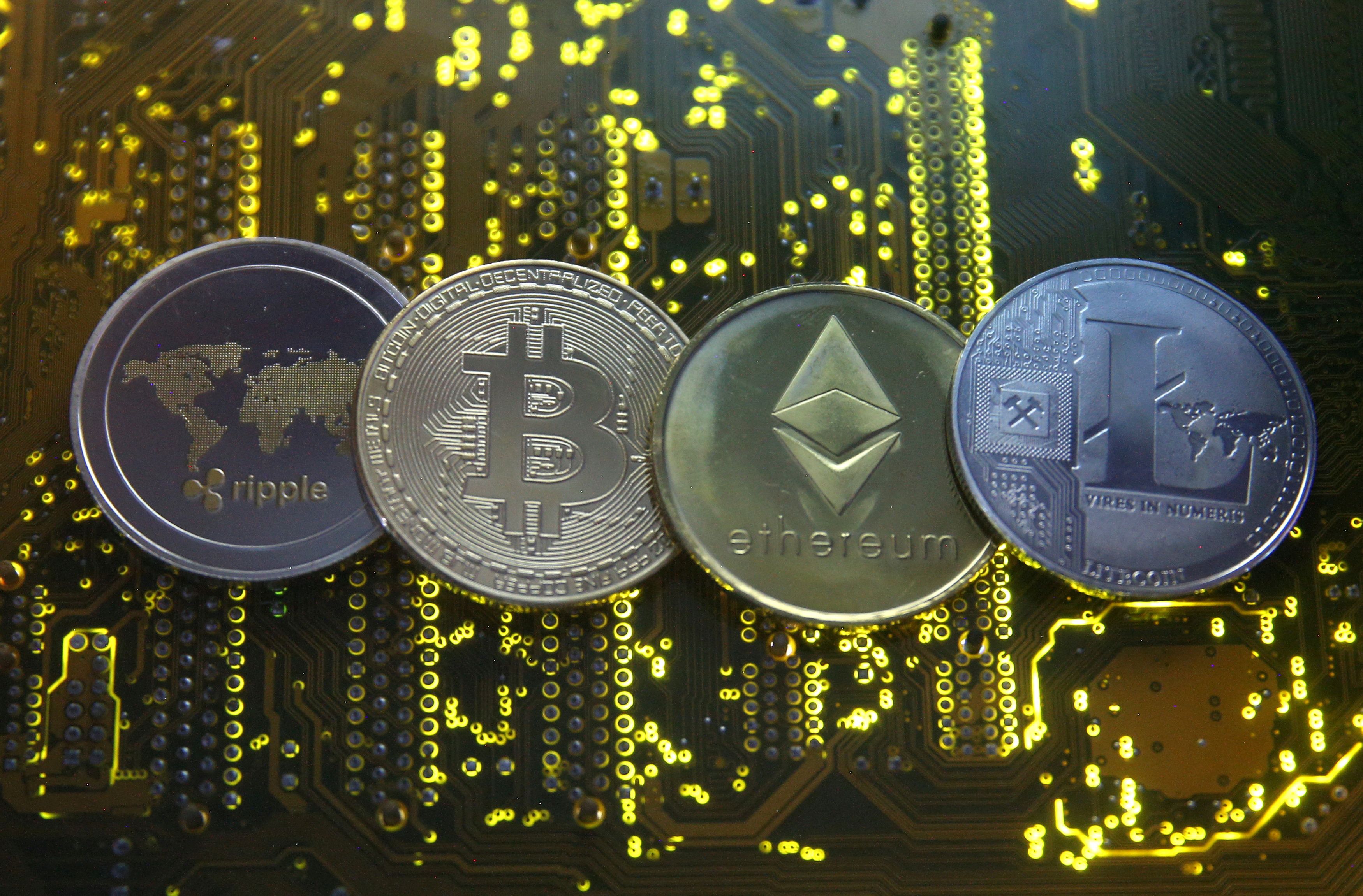
A cryptocurrency’s market cap increases when its price per unit increases. Alternatively, an increase in circulating supply can also lead to an increase in market cap. However, an increase in supply also tends to lead to a lower price per unit, and the two cancel each other out to a large extent. In practice, an increase in price per unit is the main way in which a cryptocurrency’s market cap grows.
Cryptocurrency market capitalization (market cap) refers to the total value of a particular cryptocurrency that is currently in circulation. It is calculated by multiplying the current market price of a cryptocurrency by the total number of coins or tokens that have been issued. The total market capitalization of all cryptocurrencies for today is $3,565,181,735,202
An altcoin is any cryptocurrency that is not Bitcoin. The word „altcoin“ is short for „alternative coin“, and is commonly used by cryptocurrency investors and traders to refer to all coins other than Bitcoin. Thousands of altcoins have been created so far following Bitcoin’s launch in 2009.
Cryptocurrency bitcoin price
Disclaimer: This page may contain affiliate links. CoinMarketCap may be compensated if you visit any affiliate links and you take certain actions such as signing up and transacting with these affiliate platforms. Please refer to Affiliate Disclosure
Over the past few decades, consumers have become more curious about their energy consumption and personal effects on climate change. When news stories started swirling regarding the possible negative effects of Bitcoin’s energy consumption, many became concerned about Bitcoin and criticized this energy usage. A report found that each Bitcoin transaction takes 1,173 KW hours of electricity, which can “power the typical American home for six weeks.” Another report calculates that the energy required by Bitcoin annually is more than the annual hourly energy usage of Finland, a country with a population of 5.5 million.
While subsequent years have seen entire generations of cryptocurrencies come into being and eclipse the technological advantages of Bitcoin, it remains the largest cryptocurrency by market capitalization to date and remains the most trusted of the bunch.
What is cryptocurrency
The race to solve blockchain puzzles can require intense computer power and electricity. That means the miners might barely break even with the crypto they receive for validating transactions after considering the costs of power and computing resources.
In the longer term, of the 10 leading cryptocurrencies identified by the total value of coins in circulation in January 2018, only four (bitcoin, Ethereum, Cardano and Ripple (XRP)) were still in that position in early 2022. The total value of all cryptocurrencies was $2 trillion at the end of 2021, but had halved nine months later. The Wall Street Journal has commented that the crypto sector has become „intertwined“ with the rest of the capital markets and „sensitive to the same forces that drive tech stocks and other risk assets,“ such as inflation forecasts.
The legal status of cryptocurrencies varies substantially from country to country and is still undefined or changing in many of them. At least one study has shown that broad generalizations about the use of bitcoin in illicit finance are significantly overstated and that blockchain analysis is an effective crime fighting and intelligence gathering tool. While some countries have explicitly allowed their use and trade, others have banned or restricted it. According to the Library of Congress in 2021, an „absolute ban“ on trading or using cryptocurrencies applies in 9 countries: Algeria, Bangladesh, Bolivia, China, Egypt, Iraq, Morocco, Nepal, and the United Arab Emirates. An „implicit ban“ applies in another 39 countries or regions, which include: Bahrain, Benin, Burkina Faso, Burundi, Cameroon, Chad, Cote d’Ivoire, the Dominican Republic, Ecuador, Gabon, Georgia, Guyana, Indonesia, Iran, Jordan, Kazakhstan, Kuwait, Lebanon, Lesotho, Macau, Maldives, Mali, Moldova, Namibia, Niger, Nigeria, Oman, Pakistan, Palau, Republic of Congo, Saudi Arabia, Senegal, Tajikistan, Tanzania, Togo, Turkey, Turkmenistan, Qatar and Vietnam. In the United States and Canada, state and provincial securities regulators, coordinated through the North American Securities Administrators Association, are investigating „Bitcoin scams“ and ICOs in 40 jurisdictions.
Among the 18,000-plus cryptocurrencies in existence, Bitcoin and Ethereum are the two largest cryptocurrencies by market capitalization. Bitcoin, the original and largest cryptocurrency, was developed in 2009 as an alternative monetary asset. It was meant to be an alternative to the U.S. dollar and other fiat currencies. Although some vendors may accept Bitcoin as payment, most investors view it as a speculative investment.
On 25 March 2014, the United States Internal Revenue Service (IRS) ruled that bitcoin will be treated as property for tax purposes. Therefore, virtual currencies are considered commodities subject to capital gains tax.